
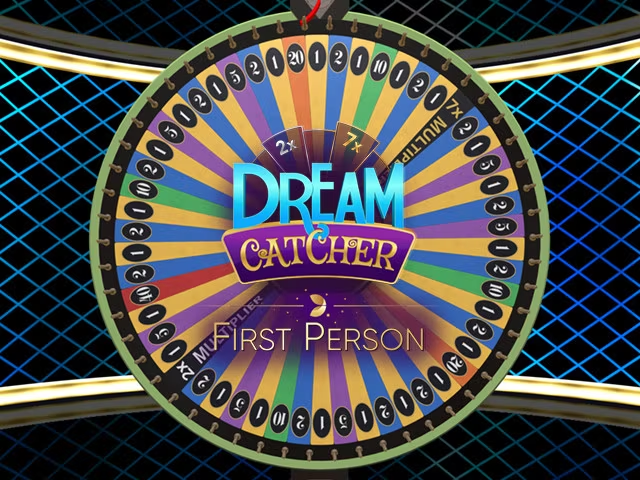
First Person Dream Catcher
More from Evolution




















Trusted by First Person Dream Catcher players










First Person Dream Catcher Mobile App & Apk

FAQ
What is Dream Catcher and how do I play it?
What are the odds of winning in Dream Catcher?
Is Dream Catcher a fair and random game?
What is the best strategy for playing Dream Catcher?
What is the RTP of Dream Catcher and how does it affect gameplay?
First Person Dream Catcher online game
Dream Catcher
Dream Catcher is a fast-paced online casino game built around a large money wheel featuring 54 segments, 7 betting options, and payouts that can reach up to 40:1. Its simplicity makes it approachable, while its randomness keeps each round unpredictable and engaging. Whether you're new to wheel-based games or just looking for something different from slots and card tables, Dream Catcher offers a straightforward yet dynamic experience that blends visual excitement with easy-to-understand rules.
The game is typically hosted live, often with a presenter spinning the wheel in real time, which adds an interactive and immersive element. Combined with bright visuals and smooth gameplay, Dream Catcher creates an atmosphere that feels both entertaining and easy to follow.
Getting Started with Dream Catcher
Getting started with Dream Catcher is straightforward, which is one of the main reasons the game appeals to both beginners and experienced players. Unlike more complex casino formats, there’s no need to memorize detailed rules or strategies before jumping in. Instead, the focus is on understanding the flow of the game, the betting options, and how each round unfolds.
At its core, Dream Catcher is designed to be intuitive. You watch the wheel, place your bets, and wait for the result. However, taking a few minutes to understand the basics can make your first session much smoother and more enjoyable.
Game Mechanics
At its core, Dream Catcher is a wheel-based game of chance. The wheel itself is divided into segments labeled with numbers: 1, 2, 5, 10, 20, and 40. There are also special multiplier segments that can significantly increase potential payouts.
Here’s a deeper look at how the mechanics work:
1. Each round begins with a betting phase, where players choose which numbers to bet on.
2. After the betting window closes, the host spins the wheel.
3. The wheel gradually slows down before landing on one of the segments.
4. If the result matches your bet, you receive a payout based on the number selected.
5. If the wheel lands on a multiplier, winnings for the next round may be increased depending on the outcome.
The presence of multipliers is what differentiates Dream Catcher from simpler wheel games. These segments can double, triple, or even multiply payouts further, creating moments of heightened excitement.
Another important aspect of the mechanics is that each spin is independent. The wheel does not “remember” previous results, which means every round is a fresh event with its own probabilities.
Placing Your First Bet
Getting started with betting in Dream Catcher is simple, but understanding your options can improve your experience:
1. Decide how much you want to wager per round.
2. Choose one or more numbers to place your bets on.
3. Distribute your stake across different segments if desired.
4. Confirm your selections before the timer runs out.
5. Watch the spin and wait for the result.
New players often prefer spreading their bets across multiple numbers to increase the likelihood of landing a win. For example, placing bets on 1, 2, and 5 can result in more frequent payouts, though typically smaller in size.
On the other hand, focusing on higher numbers like 20 or 40 can lead to larger payouts, but these outcomes occur less often. Balancing these approaches is part of what makes the game engaging.
Navigating the Game Interface
The interface in Dream Catcher is designed to be user-friendly and visually intuitive:
1. The main wheel is positioned prominently on the screen.
2. Betting options are clearly displayed with their respective payouts.
3. A countdown timer indicates how much time remains to place bets.
4. Your current bets are highlighted, allowing you to track them easily.
5. Recent results are often shown to provide a sense of game flow.
Understanding the layout helps you react quickly during the betting phase and ensures you don’t miss opportunities to place or adjust your bets.
Many versions of the game also include features like repeat bet and double bet, which allow you to quickly replicate or increase your previous wagers. These tools can make gameplay smoother, especially during longer sessions.
Dream Catcher Game Strategy and Odds
Understanding the relationship between strategy and odds in Dream Catcher can make a noticeable difference in how you approach the game. While the outcome of each spin is random, the way you distribute your bets and manage your bankroll influences your overall experience. Instead of trying to predict results, the focus should be on making informed decisions based on how the wheel is structured and how payouts are calculated.
At its core, Dream Catcher is a probability-driven game. Each segment on the wheel has a fixed number of slots, which determines how often it appears over time. The payouts are designed to reflect this distribution—frequent outcomes offer smaller rewards, while rare outcomes offer higher returns.
Payout Structure
The payout structure in Dream Catcher reflects the balance between risk and reward. Each number appears a certain number of times on the wheel, influencing both its probability and payout.
| Number | Segments on Wheel | Payout |
|---|---|---|
| 1 | 23 | 1:1 |
| 2 | 15 | 2:1 |
| 5 | 7 | 5:1 |
| 10 | 4 | 10:1 |
| 20 | 2 | 20:1 |
| 40 | 1 | 40:1 |
From this table, you can see that lower numbers dominate the wheel. For example, nearly half of the wheel consists of the number 1, which explains why it appears frequently but offers minimal returns.
Higher numbers like 20 and 40 occupy only a small portion of the wheel, making them less likely to hit but much more rewarding when they do.
Understanding this distribution is key to making informed decisions about how to place your bets.
Understanding the Odds
While the game is based on chance, it’s still helpful to understand the approximate probabilities:
Number 1: ~42.6% chance
Number 2: ~27.8% chance
Number 5: ~13% chance
Number 10: ~7.4% chance
Number 20: ~3.7% chance
Number 40: ~1.85% chance
These percentages highlight how dramatically the odds shift as payouts increase. The higher the reward, the lower the probability of landing that segment.
Because of this, many players choose a mixed betting approach—combining frequent low-payout bets with occasional high-risk selections.
Tips and Tricks for Winning at Dream Catcher
While Dream Catcher is ultimately a game of chance, the way you approach it can shape your overall experience. Instead of trying to predict outcomes, the focus should be on making smarter betting decisions, staying consistent, and avoiding common pitfalls. A structured approach can help you play longer, stay in control, and make each round more engaging.
Identifying the Best Betting Options
Choosing the right betting options depends on your goals and playing style. Here are some commonly used approaches:
Focus on numbers like 2 and 5 for a balance between risk and reward
Include 1 in your bets for more consistent, smaller returns
Allocate a small portion of your budget to higher numbers for potential big payouts
Adjust your bets based on how long you plan to play
Use repeat bets to maintain consistency
Some players prefer stability, while others enjoy the thrill of chasing larger payouts. There’s no single correct way to play, but understanding your preferences can help you shape your approach.
Avoiding Common Mistakes
Even though Dream Catcher is simple, certain mistakes can negatively affect your experience:
Increasing bets rapidly after losses
Ignoring your initial budget
Betting only on high-risk numbers
Assuming patterns exist in previous spins
Playing for too long without breaks
Being mindful of these pitfalls can help you maintain a more controlled and enjoyable session.
Pros and Cons of Playing Dream Catcher
| Pros | Cons |
|---|---|
| Simple and beginner-friendly | Limited influence over outcomes |
| Quick rounds and continuous action | Results are entirely chance-based |
| Visually engaging format | High volatility on certain bets |
| Flexible betting options | Smaller payouts on frequent results |
| Live-hosted versions add excitement | Can become repetitive over time |
